
Environmental
Science
MIURA's Green Technology for the Future.


Resources
Basic Edition
Anyone can download these resources without registration.
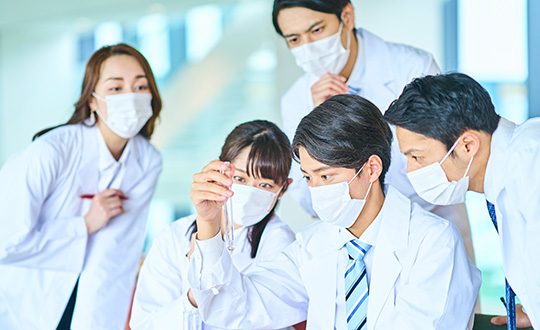
Dioxin Analysis Cleanup: 3 Common Problems and How Automation Solves Them
Accurate determination of dioxins and related POPs requires a highly controlled purification process for dioxin analysis. However, laboratories often encounter three major issues: procedural complexity, extended processing time and operator-related errors. This article outlines these problems and introduces MIURA’s automated solution, GO‑EHT (an automated dioxin purification system), designed to improve reliability and efficiency.
Updated: 2026‑03‑19Reviewed by: MIES content review team (MIURA CO., LTD.) Download
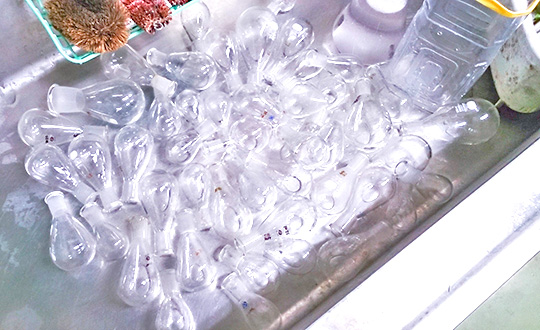
Dioxin Analysis Blank Control: 5 Root Causes and Proven Countermeasures
How to Reduce Blank Contamination in Dioxin Analysis — A Practical QA/QC Guide
In dioxin analysis, even trace levels of contamination not originating from the sample can be detected as blank signals, distorting the true concentration. When the background level is elevated, subtle differences at low concentrations become difficult to see. Therefore, routine blank control is one of the most critical elements of QA/QC.
Updated: 2026‑03‑19Reviewed by: MIES content review team (MIURA CO., LTD.) Download
Technical Edition
After entering the required information in the form, we will send you the download URL.
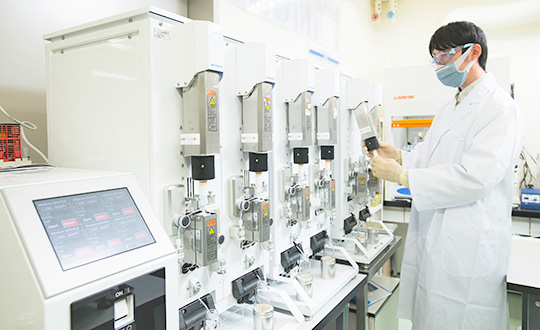
GO-EHT Automated Cleanup for GC‑MS Analysis of POPs — Technical Features and Operability
Cleanup is a critical step that determines the accuracy of dioxin and PCB analysis. Even small changes in cleanup conditions can significantly affect the final results. GO‑EHT is designed to address these sources of variability through its hardware architecture. Its internal flow path, column design, solvent volumes and fractionation conditions are all optimized to improve cleanup reproducibility.
Updated: 2026‑03‑19Reviewed by: MIES content review team (MIURA CO., LTD.) Get Access
About Miura Institute
of Environmental Science
Miura Institute of Environmental Science (MIES) was established in 1992 as a
department of MIURA CO., LTD.
MIES is recognized as the first company in Japan to have acquired
international standard ISO/IEC17025 certification for dioxin analysis and provided high quality analysis
services.
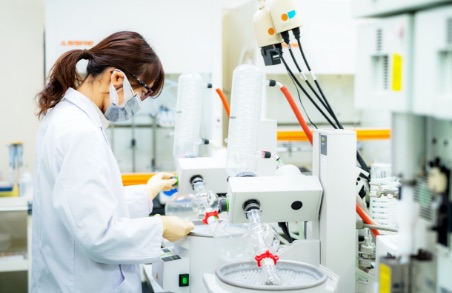
ANALYSIS
SERVICES
For more than 30 years, MIES (Miura Institute of Environmental Science) has provided comprehensive testing solutions to clients in a wide range of industries. One of key analysis services is POPs (Persistent Organic Pollutants). Our adoption of state-of-the-art technology and innovative methodologies ensure that we deliver the highest quality services.
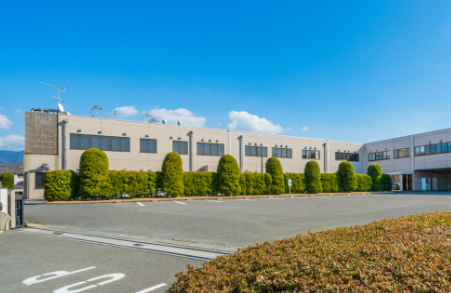
RESEARCH AND
DEVELOPMENT
We will develop products able to contribute to society by studying environmental technologies that are critical to a modern recycling-based society.
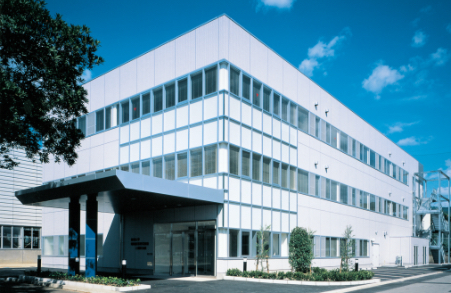
By studying (with industrial - academic - government cooperation) environmental technology, a most important issue in a modern recycling-based society, we will develop products that can contribute to society. Such product development will include measurement and countermeasure technologies for ultratrace environmental contaminants and endocrine disrupters, as well as waste recycling.
Opened MIURA Endowed Chair
Laboratory of Environmental Science for Industry, Faculty of Agriculture, Ehime University
We are conducting fundamental research on environmental measurement technology and waste recycling, and we are aiming at making this research practical by inaugurating an endowed chair at Ehime University and donating the Environmental Industry Research Center (Miura Building) to the University.